
The Hidden Environmental Costs of AI Data Centers: Water, Power, and Abandonment Concerns


The Hidden Environmental Costs of AI Data Centers: Water, Power, and Abandonment Concerns
As artificial intelligence continues to expand, tech giants like Meta are investing heavily in massive data centers to power their AI operations. One such facility outside Atlanta spans 2.5 million square feet—the equivalent of about 70 football fields. While these centers promise economic benefits like job creation, they also raise significant environmental and infrastructural challenges. This article explores water use and contamination, power grid issues, and the risk of data center abandonment, drawing from recent reports on Meta’s projects. Note that analysis of a related article on the AI investment bubble yielded no relevant details on these specific topics.

Water Use and Contamination
Data centers, especially those supporting AI, require enormous amounts of water for cooling servers. Meta’s Atlanta-area facility in Newton County, Georgia, consumes approximately 10% of the county’s total daily water supply, averaging around 500,000 gallons per day. Other proposed data centers in the same area have requested up to 6 million gallons daily, exacerbating local resource pressures. Critics, including hydrologist Newsha Ajami from Stanford University, argue that water is often an “afterthought” for tech companies, with potential for shortages if infrastructure isn’t upgraded. In Louisiana, concerns have been raised that Meta’s new data center could lead to water shortages, as highlighted in local headlines like “A Meta data center is coming to Louisiana. Why it will use up state’s water, electricity.”people.com
Beyond consumption, construction and operations have led to reported water contamination in nearby communities. Residents in Newton County, such as Beverly Morris who lives just 1,000 feet from the site, describe sediment buildup ruining appliances and turning water brown, making them “scared to drink our own water.” Neighbor Chris Wilson notes poor water pressure and frequent filter replacements, with water sometimes resembling creek runoff. Meta maintains that an independent study shows their activities are “very unlikely” to impact local wells, as they source water from over 10 miles away and use efficient cooling technologies that reuse water multiple times. The company aims to be “water positive” by 2030, restoring more water than it consumes through initiatives like rainwater capture and natural vegetation to reduce irrigation needs.people.com
Power Grid Issues
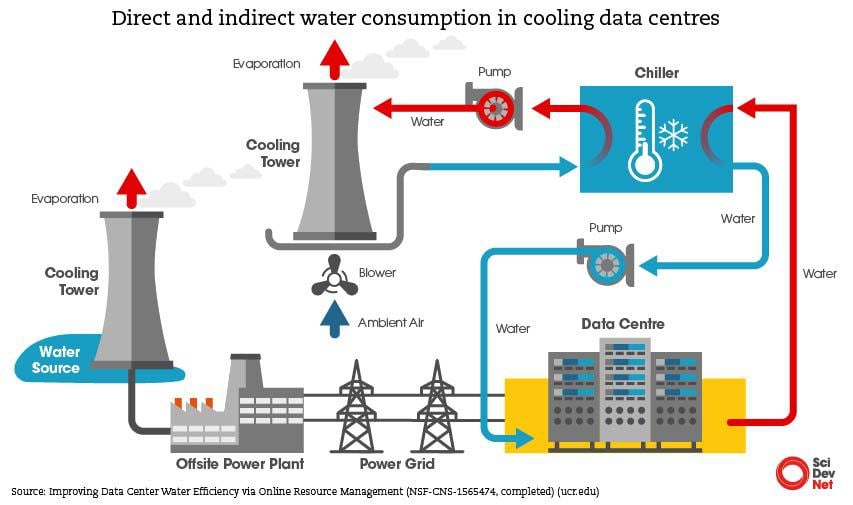
The energy demands of AI data centers are staggering, often straining local power grids. Meta’s planned facility in Richland Parish, Louisiana, will require over 2 gigawatts of power, supplied by three natural gas turbines. This has sparked debates over cost distribution, with the project costing more than $3 billion in new infrastructure, including a $550 million transmission line funded by all grid users. Public concerns include potential increases in energy bills, as voiced during Louisiana’s Public Service Commission hearings, where the approval was rushed through a 4-1 vote. Commissioner Davante Lewis highlighted a lack of transparency regarding energy consumption and costs.people.com
Meta and utility partner Entergy Louisiana assert that the company will cover interconnection costs, preventing shifts to other customers, and that Meta’s payments could lower bills by about 10% for resilience upgrades. The company also commits to matching its electricity use with clean and renewable energy sources. However, nondisclosure agreements obscure how much Meta will contribute over the 30-year turbine lifespan, fueling skepticism about long-term grid stability.people.com
Data Center Abandonment
A growing worry is the potential for overbuilding in the AI sector, leading to abandoned facilities. Susan Stevens Miller, a lawyer for the Union of Concerned Scientists, warns that “too many data centers are being built,” increasing the risk that some will be left behind if companies like Meta do not renew contracts. In such cases, the public could be saddled with ongoing costs for power plants and infrastructure, as seen in the Louisiana project where turbines are designed for a 30-year operation. This echoes broader concerns about the sustainability of the AI boom, where rapid expansion might outpace actual demand.people.com
Conclusion
While Meta’s AI data centers bring promises of jobs—such as 500 direct positions in Louisiana—and economic growth, the environmental and infrastructural tolls cannot be ignored. From water depletion and contamination to power grid strains and abandonment risks, these issues highlight the need for greater transparency and sustainable planning in the tech industry. As AI continues to evolve, balancing innovation with resource responsibility will be crucial for communities hosting these massive facilities.people.com
:max_bytes(150000):strip_icc()/GettyImages-2196329960-d5d4407cd222466c9211ccb1dc1f9ea0.jpg)


Responses